
Do you have permanent make-up and has it changed colour or shape over the years? Discolouration is possible, as is the pigments going deeper into the skin. Also, your current PMU may no longer match your face. If so, it is sometimes better to remove all the pigments first.

In my practice, I remove permanent make-up in a safe, gentle manner, either with laser or mild removal (acid/salt).
No harsh treatments, no pH 10 agents, no heat damage. I work step-by-step so that your skin recovers beautifully and is ready for new permanent make-up.
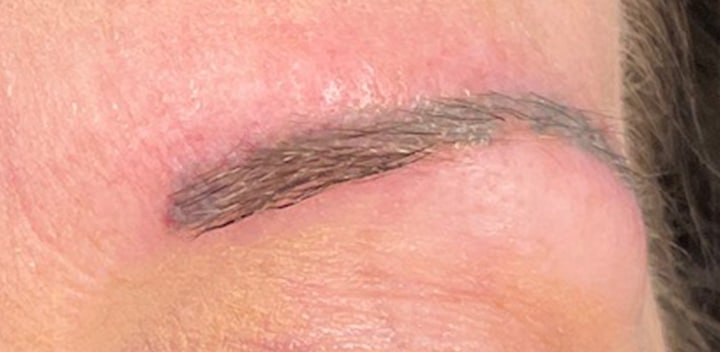
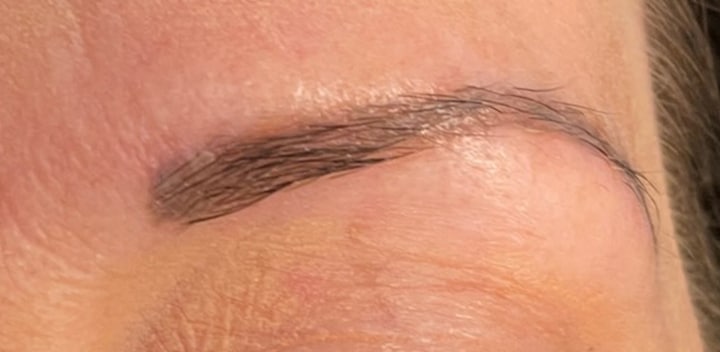
Over time, pigments can fade or change colour. What used to be a beautiful brown eyebrow suddenly looks drab, greyer or even a bit yellowish or orange. These are the common discolourations:
Fortunately, much of the discolouration can be safely fixed with the right removal or laser treatment.
I determine which method is safe and effective for each person and situation.
Laser is not a good solution in some cases. Especially with light colours like yellow or orange, laser can actually worsen the colour, think bright orange or mustard yellow spots after laser treatment. Then manual removal may be the solution. This can be done with a mild acid/salt remover.
This is what the two methods I use (combined or not) can do:
I always treat gently, with cooling and sufficient recovery time. Your skin condition (especially 50+) is paramount.
Safe treatment starts with understanding pigments, chemistry and skin reactions. This is why I work with pigments that can also be removed and replenished. I use Biotek Milano Milan’s pigment line, a neutral, mineral pigment line from Italy that fades within 9-12 months, with no unpleasant residual colours.
Pigmentology expert Francesca Frioi, General Manager of Biotek Milano, gave me the training and master classes on the subject (mid-2025s). I am therefore expertly able to remove ageing and discoloured permanent make-up in a responsible manner.
Before making an appointment, always contact me first for an intake via whatsapp. Then I will take an honest and expert look with you. Immediately send a photo taken in daylight (on your face). Then I can get a good picture of your current permanent make-up in advance.
Take action and send a picture first via .
Schedule your appointmentI always work with a tailor-made treatment plan. That starts with a good intake, clear explanations, test treatment if necessary, and honest advice. And above all: I only use pigments that I am sure I can remove later.
Step 1
First, during a telephone consultation and a clear photo, I assess whether removal is possible.
Step 2
If you come for the first treatment, we go through everything again. We test, if necessary, whether the skin is suitable for removal with laser and/or removal.
I only remove permanent make-up and not tattoos. Permanent make-up is applied more superficially into the skin. It is different from a regular tattoo. To remove a tattoo, go to an approved, licensed practice specialising in tattoos.
Preliminary research includes:
Step 3
In the following treatments (minimum 3), I carefully remove the old pigments.
Removal is done in layers with sufficient recovery time between treatments.
For older skin or sun damage, aftercare is very important. In fact, I always recommend applying a high factor (SPF 30 minimum), ensuring sufficient hydration and, above all, resting. This benefits the skin.
Step 4
After recovery, you are ready for the new permanent make-up to be applied.
The old pigments have been removed and you can opt for a fresh, new start. With modern pigments that fade without permanent damage.
The number of treatments varies from person to person.
On average:
– Dark / old PMU: 2-4 laser treatments
– Red or grey pigment: 1-3
– Yellow residual pigment: 1-2 removal sessions
– Very deep old PMU or green-black: 3-5, built up gently
There are 6-10 weeks between each treatment for optimal recovery. I do not guarantee complete removal, but I do guarantee the best possible improvement, within safe limits.
Sometimes there are several layers of pigment in the skin and then the skin is quite full. This is when I say “the pot is full”. The skin is the pot, filled with pigments. In that case, I can possibly combine the techniques, liquid and laser, by:
My approach is always: first intake and clear picture of the permanent make-up, then testing, then treatment. Only with the right technique, right timing and recovery time can you safely remove without affecting the skin structure.
This fluid specifically for removing permanent make-up consists of lactic acid, glycolic acid and salt, among other things. It is called a correction fluid or removal.
Advantage of manual PMU removal
This method often gives a clean and beautiful final result, especially when there are multiple layers of pigment set over years.
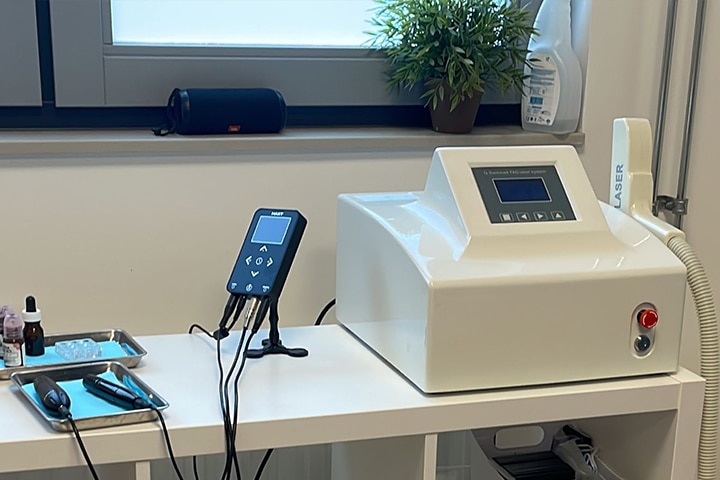
The YAG laser is suitable for:
Send a photo via [Whatsapp] and I will assess what is possible
Schedule your appointmentLasering is like removing mud. Mud on the floor, get it wet, then the sand dissolves. Let mud dry in and you step on it, then the stain becomes a large number of small particles. This is also how the laser works. The permanent make-up is broken down into small pieces that the body can clean up.
The number of treatments to remove permanent make-up depends on:
I often remove leftover old pigments to apply the new permanent make-up safely and carefully. For more information, check out the Permanent Makeup Removal page or read the blog about grey eyebrows.
Most people experience it as short, warm pricks. I work with cooling, a small spot and a low frequency. You can find everything about PMU removal here.
Yes. I treat many women between 50-70 years of age.
I do not use harsh alkaline removers or high laser settings. Safety always comes first.
Dark and grey pigments respond well to laser.
Yellow, orange and some camouflage pigments respond better to removal.
White pigment prefers not to be lasered. That is why I combine techniques. You can read about this at PMU removal.

Kooikersweg 203
5223 KE ’s-Hertogenbosch, The Netherlands
T: +31 6 13 22 31 31
E: info@permanent-mooi.com
Kapelsesteenweg 322
2930 Brasschaat (Mariaburg), Belgium
T: +32 3 644 9763
E: info@permanent-mooi.com
2026 © Permanent Mooi – permit for PMU –  refer patients to me
Get the answer in under 3 minutes by mail.

